
I want to Play!
Is it such a bad thing?

The year is 2006. It is quarter past 4 in the evening. A lanky boy screams my name from the street. The shriek voice carries enough power to wake me up. It is meant to wake me up. No mobile or internet. Not even the conventional way of ringing the bell.
This is how we used to call each other to play. The lanky one has done his job and now moves to the final destination. Our neighborhood park is shrouded in silence but is soon going to be livened up.
I dress up quickly. My mother has been notified of my absence for the next few hours by the loud calling from the lanky one who, as she says, is quite loud for a person who hasn’t even grown a beard yet. I don’t understand the relation between the two. I pick my cricket bat and a couple of stumps as I run down the stairs. Even though my sleep has been disturbed, I remain in high spirits.
The park is not very far - 200 meters to be precise. Unlike today, where urbanization has aggressively taken over all the empty spaces, playgrounds were in abundance back then. The lanky one is now in the company of three more boys. An animated discussion on the last night's international cricket match is punctuated by my entry.
The muscular one has brought 2 stumps. He takes two more from me to start erecting the pitch. The money is limited. So we get only stuff that is necessary. This does not bother us. Years later I will realize that it is not in fact the money or the resources. But the availability of parks and people is more valuable.
This is a tradition. No one person takes all the playing equipment. The convenience of carrying it every day is why it started in the first place. The one who resides the closest to the park will possess most of the playing stuff.
It takes another 15-20 minutes for everyone to gather. These are young boys, with different cultures, traditions, and financial backgrounds. Our zeal to play brings us together. With each other and against one another.
A minimum of 8 have to be present for the game to start. The playing area is dusty and a little uneven with tiny patches of grass. We form two teams of four players each. This is gully cricket with custom rules. The park is our ‘happy zone’ for the next 2 hours.
We joke at the expense of each other. Nobody takes offense. We cheer up the unhappy one. The only thing that one shows off is their skill. Somebody from the family of those 8-10 boys brings us water, snacks and refreshments. In summers, it’s Glucon-D or Roohafza or the ever-refreshing Nimbu Paani.
When I was much younger, we would venture together to the small cart tucked in the corner of the street. The vendor greeted us with a smile. He already knew our order. It was always the Banta - a fizzy lemon-based tangy drink. It came in a uniquely designed bottle and had a glass marble or kancha affixed to top. There was a thrill in opening it: the kancha was pressed down with a powerful thrust and you would hear the fizz race to the surface. The kancha would tumble into a narrow crevice, clinking against the glass with every sip. This three-rupee drink holds so many memories and stories.
The father of the muscular one even joins us for an over or two. He is probably in his forties but is quite proficient in the game. There is a feeling of respect and competitiveness as different generations come together.
With the onset of dawn, the playing group starts to shrink. The action moves to the streets. Some days, it is cycling. On others, it is the local games such as Pithu (also called lagori or seven stones) or hide and seek. I have deadlines but they are mostly breached. These 3 hours are my most anticipated in the entire day. Any extra minute is a bonus.
The weekends inspire a rare event. I wake up at 6, sometimes even 5. No one calls out. We repeated the entire process. There was a little more time than usual. The game was much more rewarding.
While on my way back home, I knew a reprimand awaited me. Playing came with conditions. I always wished for it to be unconditional. The notion of play was to adjust according to everything else. I wished for it to be otherwise.
Even though playing is a highly trivialized activity in an Indian household meant only for recreation, I have considered it serious enough to constitute an integral part of my growing up. It is one of the best decision I have made.
Brian Lara, the former West Indies cricketer and captain, writes in his autobiography, The English Chronicles:
“Friendships forged on the pitch and in the rain are unbreakable”.
The boys that I played with ended up becoming friends. Friends who would shape my future. There were always the sharp-edged ones. But then, what’s the fun in playing without defeating them. This is where my foundations of play were laid. Playing was talking and socializing for me. It became the most comfortable form of expression.
I enjoyed being breathless and drenched in sweat. I would get bruises and even break a leg or two. But that wasn’t enough to stop me. Till this point, my notion of play was limited to cricket and outdoor sports.
But this was about to change.
I was in college when I got introduced to the Board Games. The next level in my journey of play. A tall guy with a moustache and a big belly got hold of an interesting shootout game. He thought it would be the right type of fun in whatever time we could afford after our classes.
The game was called Bang!.
It was a more developed and advanced version of our local stealth game “Raja Mantri Chor Sipahi”. There are 7 roles. You get the roles randomly, based on the card you are dealt. In addition to that, you are given a character with a permanent power. This could be something like “ ability to attack a player any number of times”. Every power card has bullets drawn on it, indicating both the number of lives you have and the number of cards you can hold.
Each role has an objective. For example, an outlaw has to get rid of the sheriff. The deputy has to guard the Sheriff. Only the Sheriff reveals his/her identity. Others play in stealth, according to their roles. The moustache guy liked being the outlaw, as it allowed him to shoot and attack from the word go.
A minimum of 4 people were required to play but we were never short. The game was actually interesting, as the moustache guy had suggested. We were hooked for hours. A single game lasted somewhere around 15-20 minutes and we would end up playing for 2 hours without a break.
Board Games were not a new commodity for me. I had played Ludo and Snakes and Ladders before. My childhood would be incomplete without them. Even Chess. If that would count. But they were simple and lacked elements of strategy, negotiation and team play like the ones I discovered later in life.
Another game that thrilled me was Monopoly. I found that luck played a slightly dominant role. The roll of the dice wields immense power and can dictate the game. But it’s not all luck. The negotiation element is something I really enjoyed. It also emphasized for me the importance of decision-making.
There are many more games. Shasn, Sequence, Risk. Every game is unique. Shasn, for example, is a political strategy game. It is extremely engaging, given the people playing have political knowledge or are a keen observer of the changes happening in the society. As years have passed, I have taken to Board Games with a lot of intent and passion. They are fulfilling and satisfying, and without any physical drain, it is easier to get to work the next day.
In that sense, pickleball has been a great addition to my daily life. The game has been around for a couple of years but I only recently tried my hand at it. I found it to be extremely fun. It is not as intense as Table Tennis. Or physically demanding as badminton. Or fast-paced as lawn tennis. But it has an element of skill and gets my heart racing. It is a good game to have as age catches up and injuries cling to me like bees to honey.


The thing that hurts is the pay-per-play model. The neighborhood parks are shrouded in silence permanently. Private spaces are being converted into courts where you are charged by the hour. It is a full-fledged business. Want to play? Pay.
Result is an important feature in whatever I have talked about till now. You play to win. Right. Me too. But I also play to play. To be around those teammates. In that environment. I like the tension and the nervousness. The pang of thrill when my plan works out the way I had intended. I don't remember exactly when it happened. But after a point in life, the win-loss binary ceased to exist.
It's not like I stopped chasing wins. Or losses didn't hurt. But the win at all cost mentality started to diminish. The people on the other side were my friends. And even if they weren't, I realized that valuing people is much more important than valuing results.
I would also praise my opponents when they outplayed or outsmarted me. That became the definition of competitiveness. Some call me less aggressive. Others call out the lack of hunger in me. As if it matters. As if they matter.
I recently saw Aamir Khan’s Sitaare Zameen Par. The climax was heart-warming and carried a simple yet important message. But something else caught my attention.
Team Sitaare lost in the finals and yet they were happy about it. They were celebrating the victory of their opponents. They were happy in being ‘second’. In another scene, the coach in his motivational speech tells the team
“Opposite team ki band bajate hain”.
To which, one of the team members replies
“Hum jeetne aaye hain, bezzati karne nahi”.
I know this was not the intended messaging of the film but it beautifully conveyed that there is an intrinsic value in play. That results are just a by-product.
What is that intrinsic value? Maybe it’s joy. Or social connection. Or maybe it’s self-expression. It is that value I have always enjoyed and cherished.
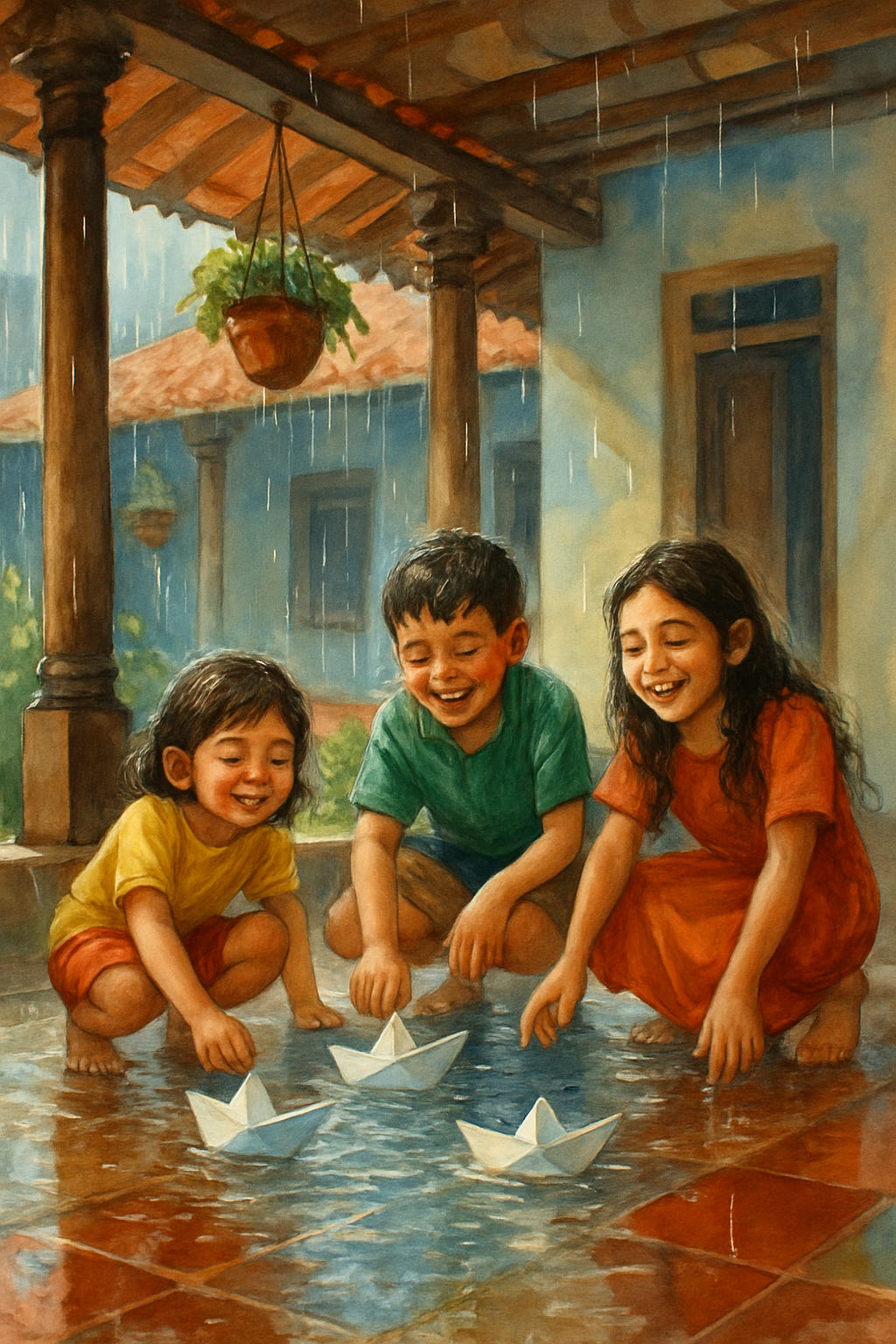
When the monsoons peaked and water logged in the verandah of my house, I would tear up a paper from my notebook. The center part with the protruding staple pins. This would go on to become a paper boat. I was joined by my brothers and sisters and soon we would be holding a race.
I would fly paper planes from the school bus and keep looking at it till it was crushed by a car or another bus.
One notebook was reserved for paper games charade. From tippy tippy tap to Khulja Sim Sim, we would find pleasure in simple activities. Of course there was no real prize for choosing the correct door.
During Independence day, I would fly kites. On Holi, I would chase people with colors.
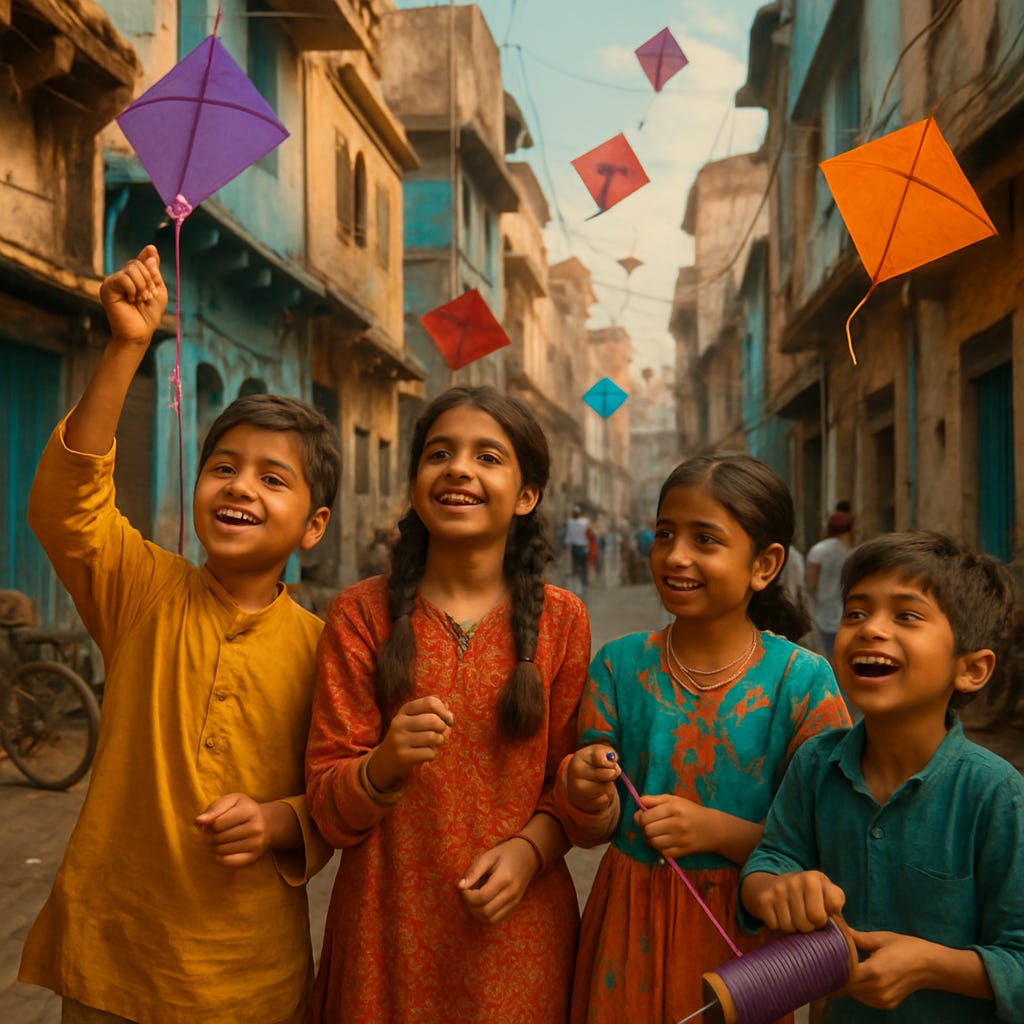
It is not just organized sport. I have been bitten by the bug of unstructured and free play as well. No rules. No pressure to win.
Schools are meant to encourage playing and instill habits that drives you in the years to come. Instead, they often kill those instincts and somehow propagate the notion that play is something you should stay away from. That playing has no or little use.
To begin with, we only had one games period in the entire week. Just one. That was more of a compulsion because the Education Board mandated it. To their credit, there was time allocated for music, arts, dance and other activities. But proper game time was limited to 30 minutes.
I used to eagerly look forward to those thirty minutes. But even those were not guaranteed. If you broke a rule, instant punishment was cancelling the games period. To take away any and all creative time allotted in the week that would pave the way for happiness and productivity. The very thought that stopping a child from playing can be treated as a sanction disgusts me to the core.
The gross misunderstanding of the difference between sport and play that happens at the school level is an injustice to so many children. I wish there was at least one person who told me to take playing seriously.
Every time I stepped out to play I was told I was making a mistake. By someone or the other. Honestly, it is one of the best mistakes I have made.
I have also come to realize that I find it tough to connect with people who don't take play seriously. For whom, it is just a hobby or a recreational activity. Who would say “arre game hi toh hai”. I don't try and make them understand. I silently walk away. I know I will find my tribe.
Playing is a feeling. Like happiness and sorrow. Do you really think play and emotions are not connected? Playing is the difference between existing and living.
Even though playing is a highly trivialized activity meant only for recreation, I have considered it serious enough to constitute an integral part of my life.
Thank you for reading 🙂
Whether it’s a forgotten childhood game or a newfound passion as an adult, play is woven into who we are. What’s your favorite memory of play—on the streets, in the park, or at home?
Share your stories in the comments below or tell me how you keep the spirit of play alive in your daily life.

